
Why Concrete Works So Well Around a Pool
A pool surround takes constant sun, water and bare feet, so the material around the edge matters almost as much as the pool itself. Concrete has become the standard choice for homeowners across Brisbane's south side because it holds up to that punishment without turning into a maintenance job every summer.
If you're weighing up pavers, tiles or concrete for a new or refreshed pool area, here's what actually makes concrete a practical option, and what to look for so the surface performs the way it should.
What Makes Concrete Work So Well Around a Pool
Handling Water and Heat Without Wearing Out
A pool surround is never really dry. Splash-out, hosing down, and constant sun exposure all put a surface through more than most other parts of a property see. A properly mixed, water-resistant concrete pour handles that daily cycle of wet and dry without the fading, staining or surface breakdown that cheaper materials show after a Brisbane summer or two.
Control joints also play a bigger role here than people expect. Concrete naturally moves slightly as it cures and as temperatures shift through the day, and joints placed in the right spots let it do that without cracking through the surface.
Getting the Slip Resistance Right
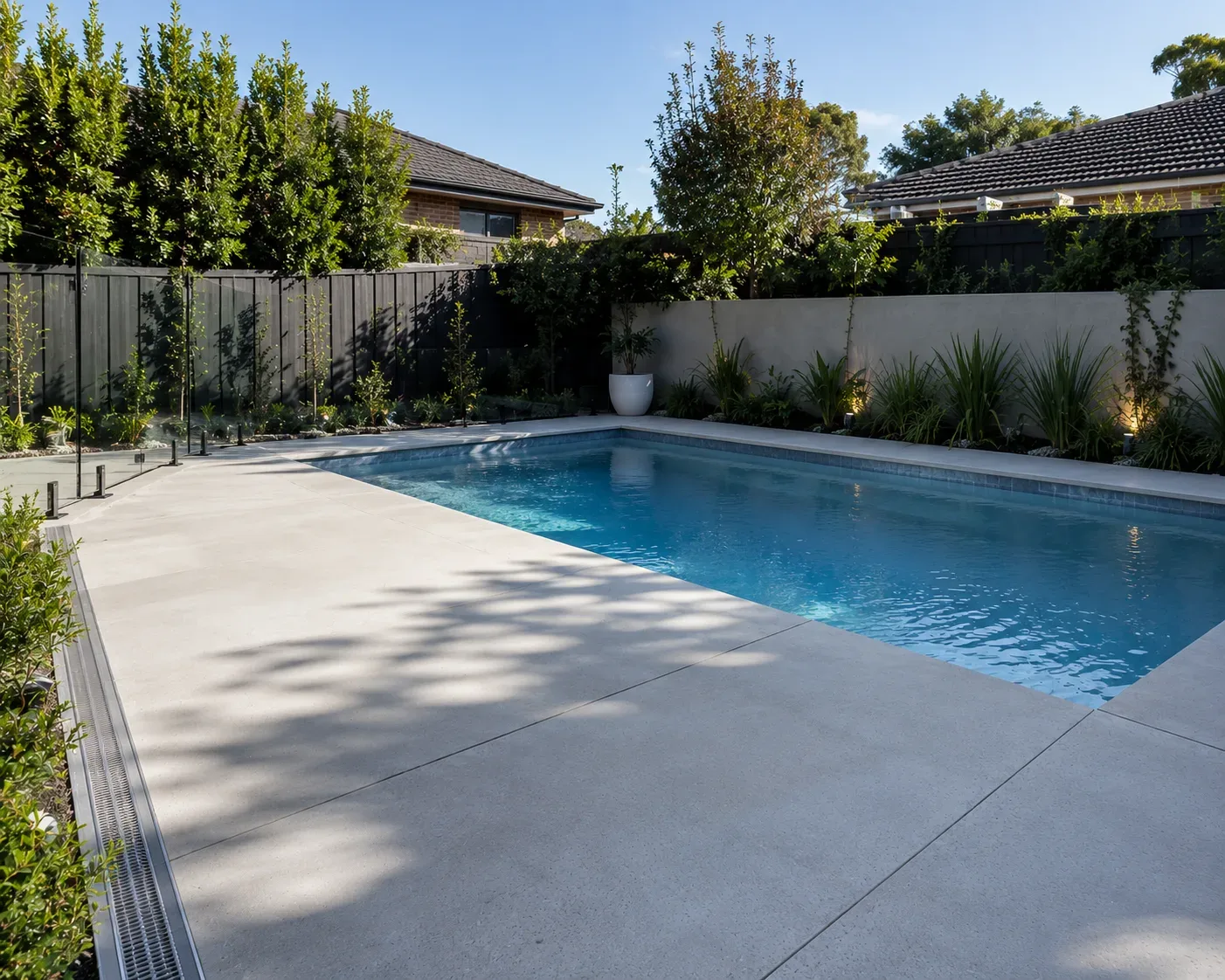
A smooth, polished finish might look sharp in a photo, but it's the wrong choice right beside a pool. A broom finish or a lightly exposed aggregate finish gives real grip underfoot when the surface is wet, which matters most for kids and older family members moving around the edge.
Why Pool Drainage Matters More Than You'd Think
The surface around a pool needs a slight fall away from the coping so water doesn't sit and pool after every swim or rain shower. Get that fall wrong, and you end up with standing water, a slippery edge, and eventually algae building up in low spots that never quite dry out.
Getting a Pool Surround Built to Last
Common Mistakes With Pool Surround Concrete
Most of the problems we see around pools come down to the same few things done in a rush. A mix that isn't suited to constant wet-area exposure, joints placed too far apart, or a pour finished without enough attention to the fall towards drainage. None of these show up on the day the concrete goes in, they show up a year or two later as cracking, pooling water or a surface that's suddenly slippery when it shouldn't be.
Getting the mix, the finish and the fall right from the start is what keeps a pool surround looking and performing the way it should for years, rather than needing patch-up work not long after it's poured. When all three are handled properly, concrete gives you a pool area that's genuinely low fuss, safe underfoot, and built to last through everything a Brisbane summer throws at it.